Original interpretation / An invitation to look
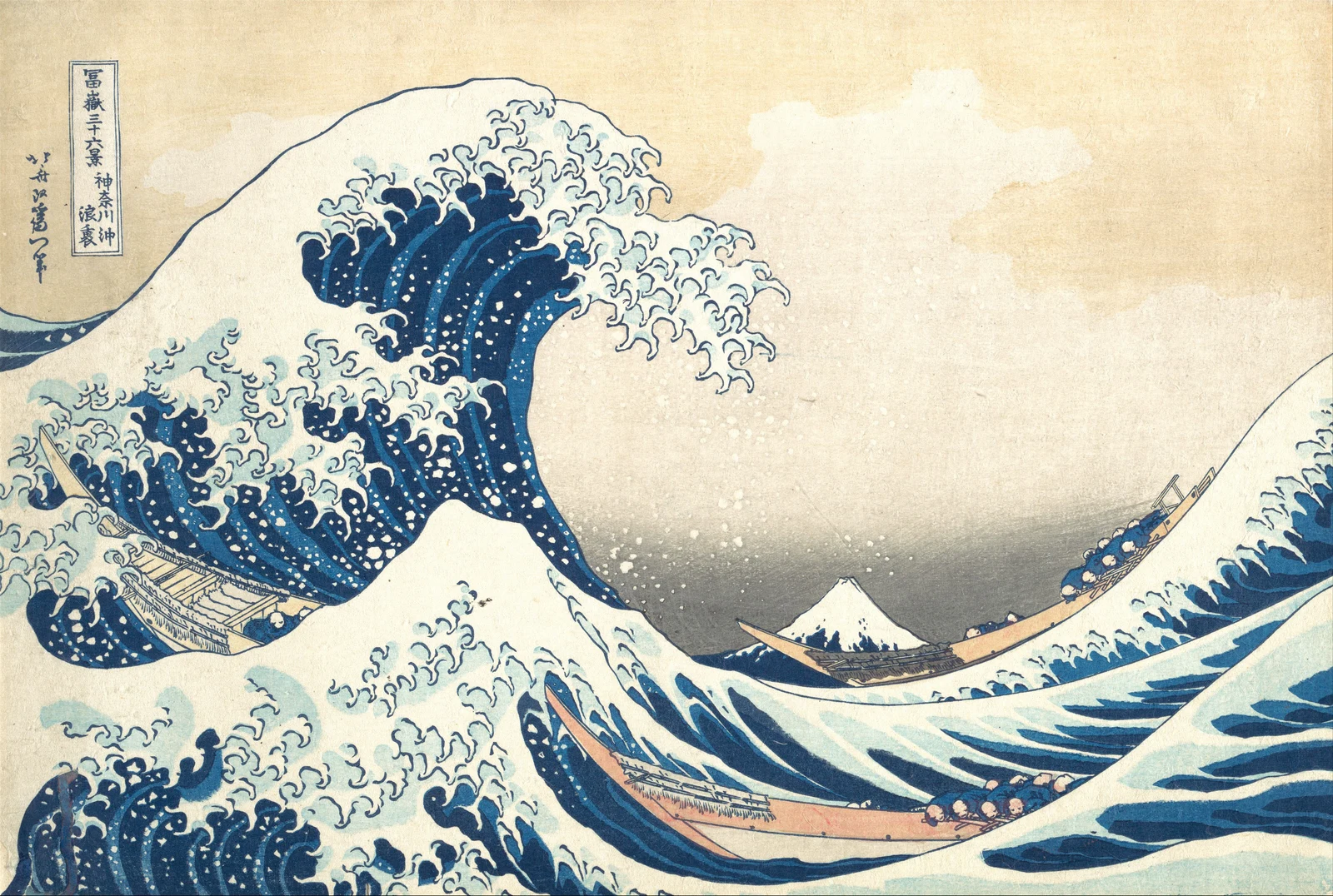
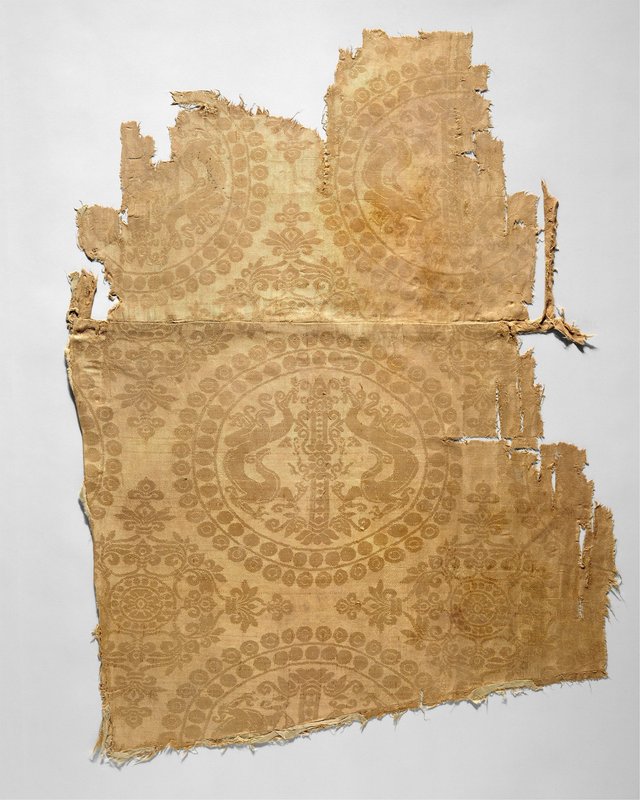
Begin where the vessel turns away. Its painted marks continue around a curved body, while the photograph gives us one face of it. Hokusai’s sheet presents a bounded field at once. Repetition is our way into both works, but the surface changes how far the eye can follow it.
A surface changes the mark
The vessel does not give itself to a single view. Its curved body carries the image away from us. A photograph makes that curve readable, but it cannot replace turning around the object. The painted boats seem to continue into a part of the surface that this view withholds.
The print offers a different bargain. Its edges fix the field. Large curves, narrow boats and a small mountain can be held together in one glance. We can move closer, but the composition remains within the sheet.
Repetition is never only repetition
A repeated element can steady the eye or accelerate it. Follow the marks one at a time; then let them become a group. In the vessel, the rhythm can suggest a band around volume. In the print, it can gather force at the edge of the wave.
These are observations about the images in front of us. They do not require a story about influence between distant makers, and they do not recover the private intention of either one.
What survives, and what changes
The mark survives within a material object, then within a photograph, a catalogue, a screen. Every encounter changes its scale and surroundings. A useful digital collection makes those changes visible: a detail stays connected to the complete work, and a comparison stays connected to its sources.
Try the two works side by side. Which part of the movement is carried by the mark itself, and which part comes from the surface that holds it?
Works and sources
Catalogue titles, dates, media and images come from The Met’s vessel record and Hokusai print record. Both selected images are released under CC0 through the museum’s Open Access program.