Artologium

The Cleveland Museum of Art / Cleveland

When does furniture become sculpture?

A table asks to be walked around. An alabaster figure turns cloth into volume. A painted portrait holds a person still. Here, start with the shape of a presence.

Browse 804 selected works →

Have five minutes? / An Artologium looking sequence

Three ways to give a body form

Three works, three pauses. These questions invite close looking; they do not propose a historical connection between the objects.

  1. Look closer
    Tea TableCarlo Bugatti (Italian, 1856–1940) · c. 1907The Cleveland Museum of Art · CC0
    Image & source
    Tea Table — Furniture and woodwork by Carlo Bugatti (Italian, 1856–1940). inlaid wood (mahogany?), cast and gilded bronze mounts, inlays of ivory or bone, metal, and mother-of-pearl (marine mussels or pearl oysters).

    Furniture and woodwork / Source record

    Tea Table

    Read the catalogue and evidence →
    Maker
    Carlo Bugatti (Italian, 1856–1940)
    Date
    c. 1907
    Medium
    inlaid wood (mahogany?), cast and gilded bronze mounts, inlays of ivory or bone, metal, and mother-of-pearl (marine mussels or pearl oysters)
    Collection
    The Cleveland Museum of Art
    Accession
    1991.45
    Credit
    Leonard C. Hanna Jr. Fund
    Rights
    Public domain · CC0

    Public domain · CC0. Institution-provided display image; no Artologium pixel changes. Original-resolution image linked at source. Editorial views may show a detail.

    Institution’s full-resolution image ↗Museum reuse policy ↗

    Institutional rights designation checked 2026-10-17. Catalogue descriptions are normalized from source data; visual interpretation may be unassessed.

    Original museum record ↗Read the CC0 dedication ↗

    Full supplied image / A looking prompt

    Where support becomes ornament.

    Look at the curved supports beneath the tabletop. Follow one line downward and notice where its structural role becomes difficult to separate from its shape.

    Original museum record ↗

    01 / Circle

    Tea Table

    Trace the outline before reading the materials. Where does support become ornament?

    Look closely & read the record →
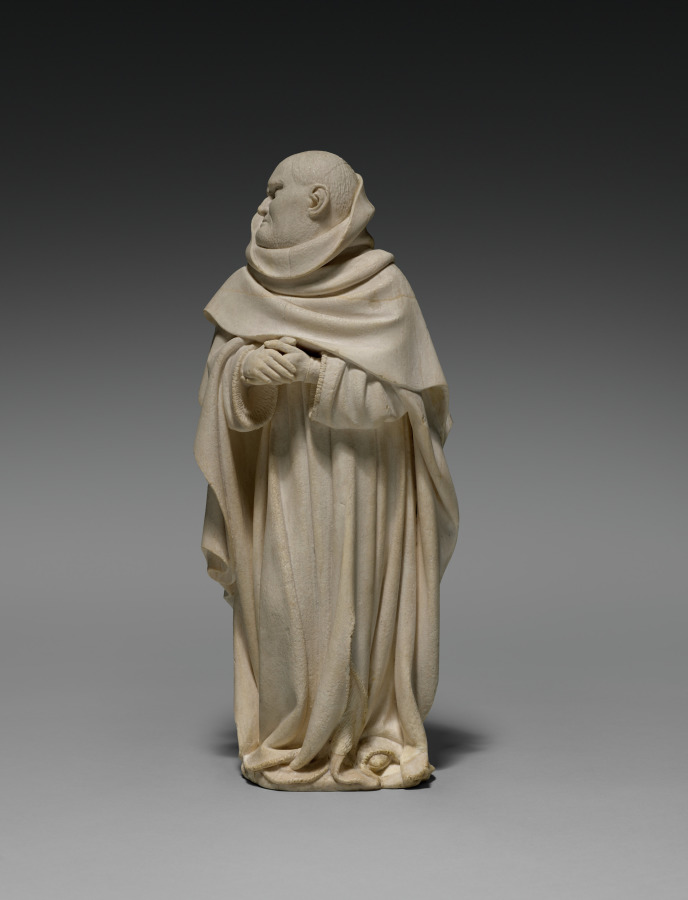
  2. Mourner from the Tomb of Philip the Bold, Duke of Burgundy (1364–1404) — Sculpture by Claus de Werve (Netherlandish, 1380–1439). vizille alabaster.
    Mourner from Philip the Bold’s tombClaus de Werve (Netherlandish, 1380–1439) · 1404–10The Cleveland Museum of Art · CC0
    Image & source
    Mourner from the Tomb of Philip the Bold, Duke of Burgundy (1364–1404) — Sculpture by Claus de Werve (Netherlandish, 1380–1439). vizille alabaster.

    Sculpture / Source record

    Mourner from the Tomb of Philip the Bold, Duke of Burgundy (1364–1404)

    Read the catalogue and evidence →
    Maker
    Claus de Werve (Netherlandish, 1380–1439)
    Date
    1404–10
    Medium
    vizille alabaster
    Collection
    The Cleveland Museum of Art
    Accession
    1958.67
    Credit
    Bequest of Leonard C. Hanna Jr.
    Rights
    Public domain · CC0

    Public domain · CC0. Institution-provided display image; no Artologium pixel changes. Original-resolution image linked at source. Editorial views may show a detail.

    Institution’s full-resolution image ↗Museum reuse policy ↗

    Institutional rights designation checked 2026-10-17. Catalogue descriptions are normalized from source data; visual interpretation may be unassessed.

    Original museum record ↗Read the CC0 dedication ↗

    02 / Fold

    Mourner from Philip the Bold’s tomb

    Follow a fold from the hood to the feet. How much of a body can you sense without seeing it?

    Look closely & read the record →
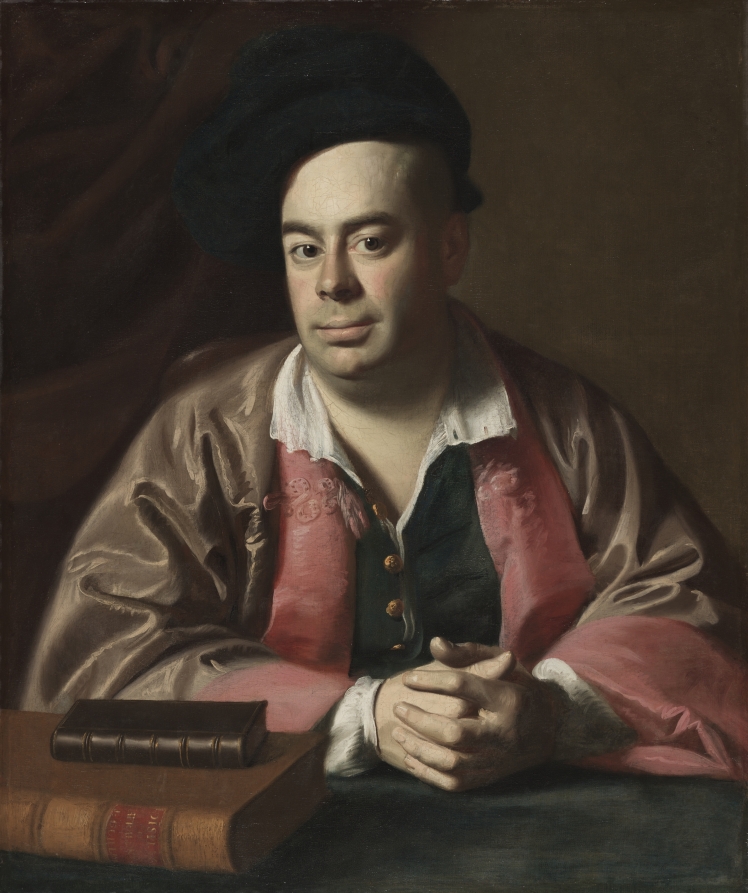
  3. Nathaniel Hurd — Painting by John Singleton Copley (American, born The Thirteen Colonies, 1738–1815). oil on canvas.
    Nathaniel HurdJohn Singleton Copley (American, born The Thirteen Colonies, 1738–1815) · c. 1765The Cleveland Museum of Art · CC0
    Image & source
    Nathaniel Hurd — Painting by John Singleton Copley (American, born The Thirteen Colonies, 1738–1815). oil on canvas.

    Painting / Source record

    Nathaniel Hurd

    Read the catalogue and evidence →
    Maker
    John Singleton Copley (American, born The Thirteen Colonies, 1738–1815)
    Date
    c. 1765
    Medium
    oil on canvas
    Collection
    The Cleveland Museum of Art
    Accession
    1915.534
    Credit
    Gift of the John Huntington Art and Polytechnic Trust
    Rights
    Public domain · CC0

    Public domain · CC0. Institution-provided display image; no Artologium pixel changes. Original-resolution image linked at source. Editorial views may show a detail.

    Institution’s full-resolution image ↗Museum reuse policy ↗

    Institutional rights designation checked 2026-10-17. Catalogue descriptions are normalized from source data; visual interpretation may be unassessed.

    Original museum record ↗Read the CC0 dedication ↗

    03 / Pause

    Nathaniel Hurd

    Look from the face to the hands. Which gesture gives the portrait its sense of a person?

    Look closely & read the record →

Into the Afterlives lab

The record opens a story.

A work can lead to a question about transmission. The connection below tells you precisely how this museum enters each investigation.

A work elsewhere in this selection

A small gesture, carried forward

Cleveland’s Millet drawing appears as a comparison version. The dossier does not identify it as the exact sheet photographed for Van Gogh.

Interactive passage · Sources and claim limits inside

Museum record used in research

A pattern travels. A name stays.

Cleveland’s Square Shawl record helps locate a particular object within the investigation. This source link does not claim that the three works above influenced one another.

Visual essay · Sources and claim limits inside

What is here / 804 selected works

A partial view.
An open door.

The largest of our current museum selections spans paintings, prints, sculpture, textiles and designed objects. Its size reflects the records admitted by our sourcing process; it does not measure the museum’s importance or the breadth of its full collection.

Across collections / 03

Plaster and Bronze

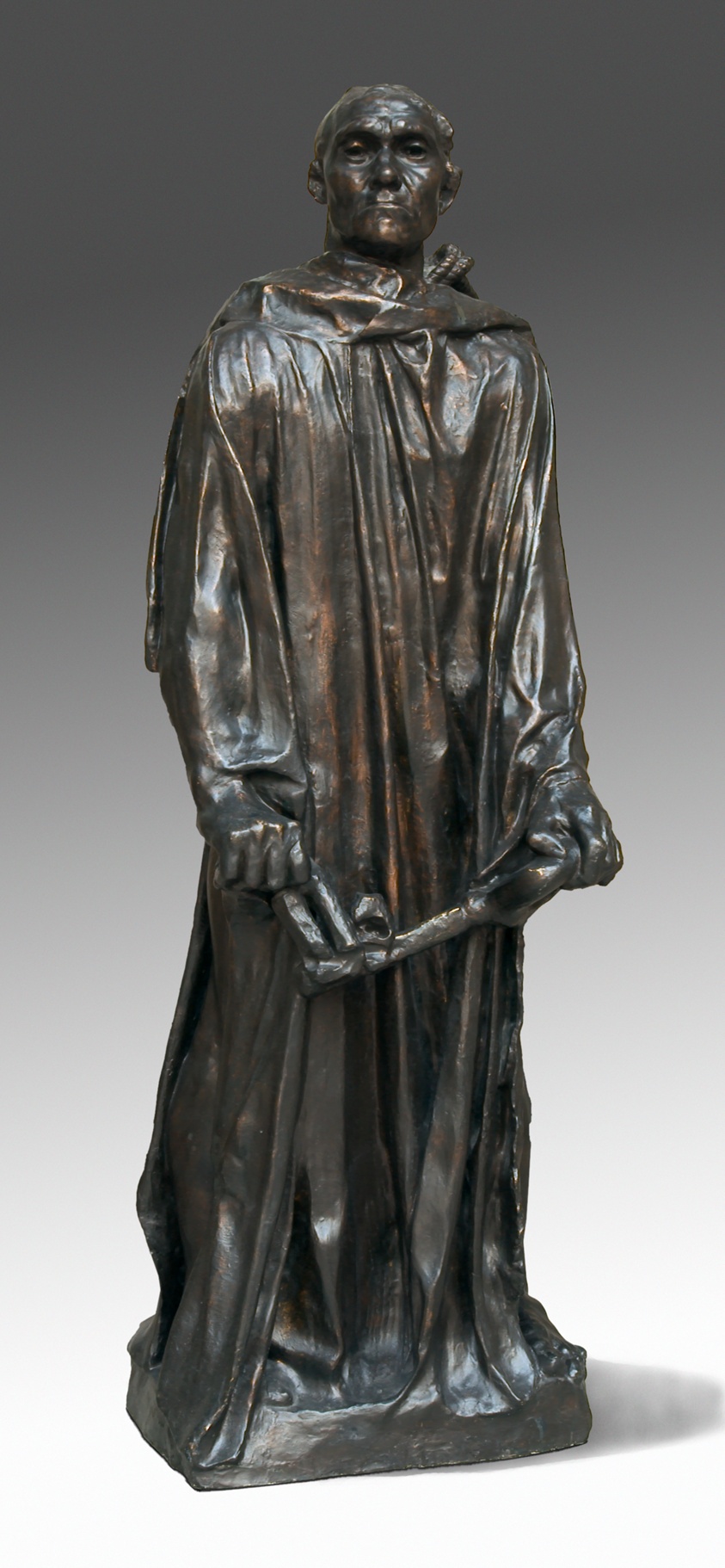
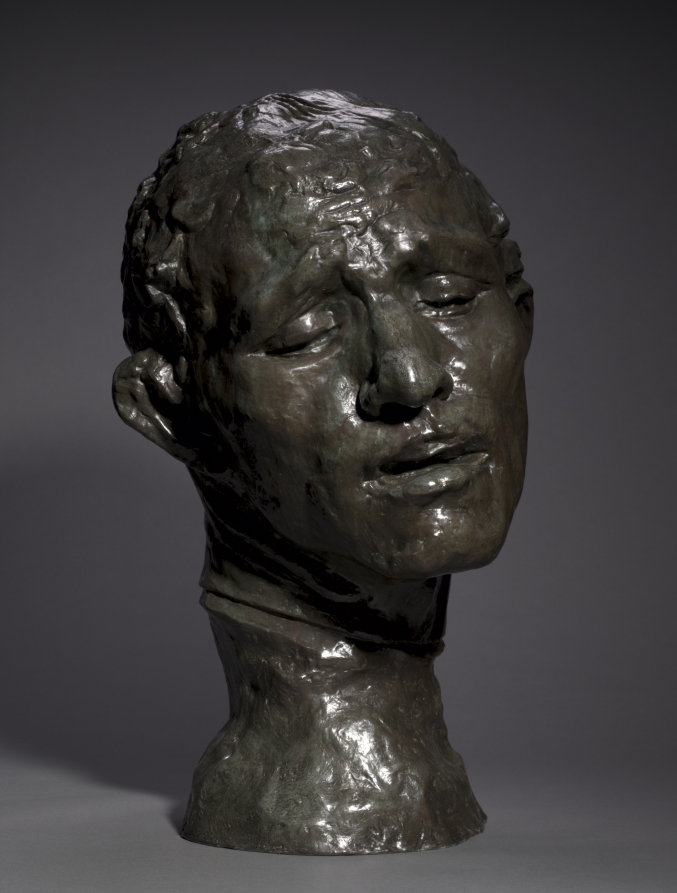
Two figures from Rodin’s Burghers of Calais monument—one a full-length plaster study in Chicago, one a heroic bronze head in Cleveland—show how two mediums record the same civic commission differently.
The Art Institute of Chicago1893.187

A work made of plaster.
Sculpture
Image & source
A work made of plaster.

Sculpture / Source record

A Burgher of Calais (Jean d'Aire)

Read the catalogue and evidence →
Maker
Auguste Rodin (French, 1840–1917)
Date
Modeled 1889
Medium
Plaster
Collection
The Art Institute of Chicago
Accession
1893.187
Credit
Gift of Mrs. Addie M. Hall Ellis
Rights
Public domain · CC0

Public domain · CC0. Unchanged copy of the institution’s verified web image; smaller responsive JPEGs are resized derivatives. Full-resolution image remains linked to the institution. Editorial views may show a detail.

Institution’s full-resolution image ↗Museum reuse policy ↗

Institutional rights designation checked 2026-10-17. Catalogue descriptions are normalized from source data; visual interpretation may be unassessed.

Original museum record ↗Read the CC0 dedication ↗

The Cleveland Museum of Art1920.120

Heroic Head of Pierre de Wissant, One of the Burghers of Calais — Sculpture by Auguste Rodin (French, 1840–1917). bronze.
Sculpture
Image & source
Heroic Head of Pierre de Wissant, One of the Burghers of Calais — Sculpture by Auguste Rodin (French, 1840–1917). bronze.

Sculpture / Source record

Heroic Head of Pierre de Wissant, One of the Burghers of Calais

Read the catalogue and evidence →
Maker
Auguste Rodin (French, 1840–1917)
Date
1886
Medium
bronze
Collection
The Cleveland Museum of Art
Accession
1920.120
Credit
The Norweb Collection
Rights
Public domain · CC0

Public domain · CC0. Institution-provided display image; no Artologium pixel changes. Original-resolution image linked at source. Editorial views may show a detail.

Institution’s full-resolution image ↗Museum reuse policy ↗

Institutional rights designation checked 2026-10-17. Catalogue descriptions are normalized from source data; visual interpretation may be unassessed.

Original museum record ↗Read the CC0 dedication ↗

Compare the plaster and the bronze
Collection sources & reuse

Every selected image links to its museum record and CC0 dedication. The image’s source control includes its accession, original file and credit.

Museum image policy ↗ · Museum terms ↗