Artologium

Art, in relation.

Follow the fold

Across alabaster, plaster, engraved copper, and red chalk, follow how five works in five museums use folds to conceal, anchor, or animate a body.

An authored path / 5 works

How do carvers, sculptors, engravers, and draughtsmen turn the weight of cloth into volume and emotion?

These comparisons follow drapery and folds in the displayed images. Each stop keeps its own material, source and history.

Explore this description in the catalogue →
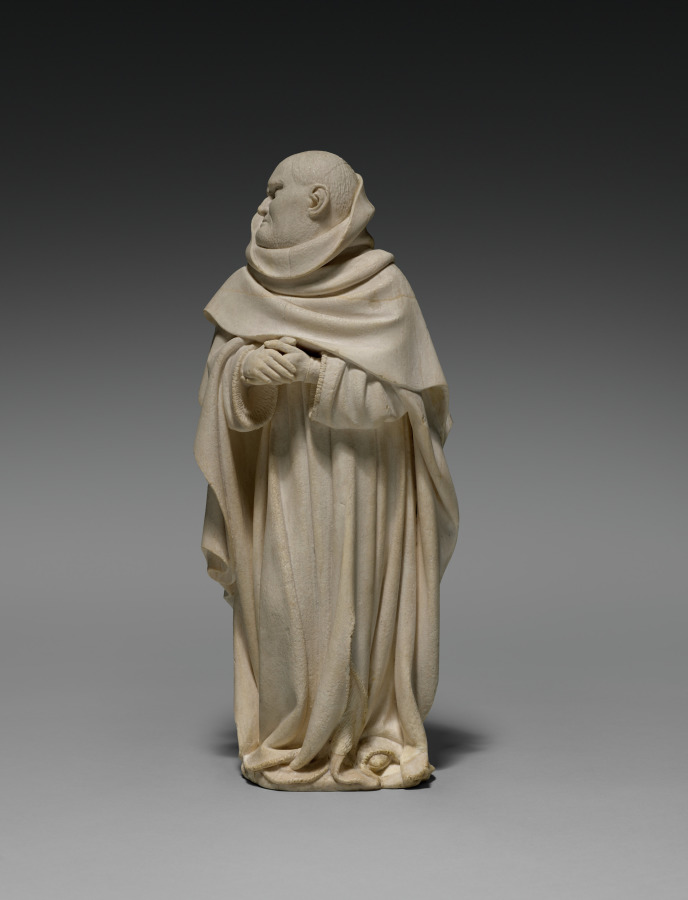
  1. Mourner from the Tomb of Philip the Bold, Duke of Burgundy (1364–1404) — Sculpture by Claus de Werve (Netherlandish, 1380–1439). vizille alabaster.
    Mourner from the Tomb of Philip the Bold, Duke of Burgundy (1364–1404)Claus de Werve (Netherlandish, 1380–1439) · 1404–10The Cleveland Museum of Art · CC0
    Image & source
    Mourner from the Tomb of Philip the Bold, Duke of Burgundy (1364–1404) — Sculpture by Claus de Werve (Netherlandish, 1380–1439). vizille alabaster.

    Sculpture / Source record

    Mourner from the Tomb of Philip the Bold, Duke of Burgundy (1364–1404)

    Read the catalogue and evidence →
    Maker
    Claus de Werve (Netherlandish, 1380–1439)
    Date
    1404–10
    Medium
    vizille alabaster
    Collection
    The Cleveland Museum of Art
    Accession
    1958.67
    Credit
    Bequest of Leonard C. Hanna Jr.
    Rights
    Public domain · CC0

    Public domain · CC0. Institution-provided display image; no Artologium pixel changes. Original-resolution image linked at source. Editorial views may show a detail.

    Institution’s full-resolution image ↗Museum reuse policy ↗

    Institutional rights designation checked 2026-10-17. Catalogue descriptions are normalized from source data; visual interpretation may be unassessed.

    Original museum record ↗Read the CC0 dedication ↗

    01 / The Cleveland Museum of Art / Look, then compare

    Mourner from the Tomb of Philip the Bold, Duke of Burgundy (1364–1404)

    Follow the heavy alabaster cloak from hood to hem in Cleveland’s Mourner. How much of the figure’s grief is carried by the cloth alone?

    Artologium interpretation · developed with AI assistance

    vizille alabaster
    Claus de Werve (Netherlandish, 1380–1439) · 1404–10
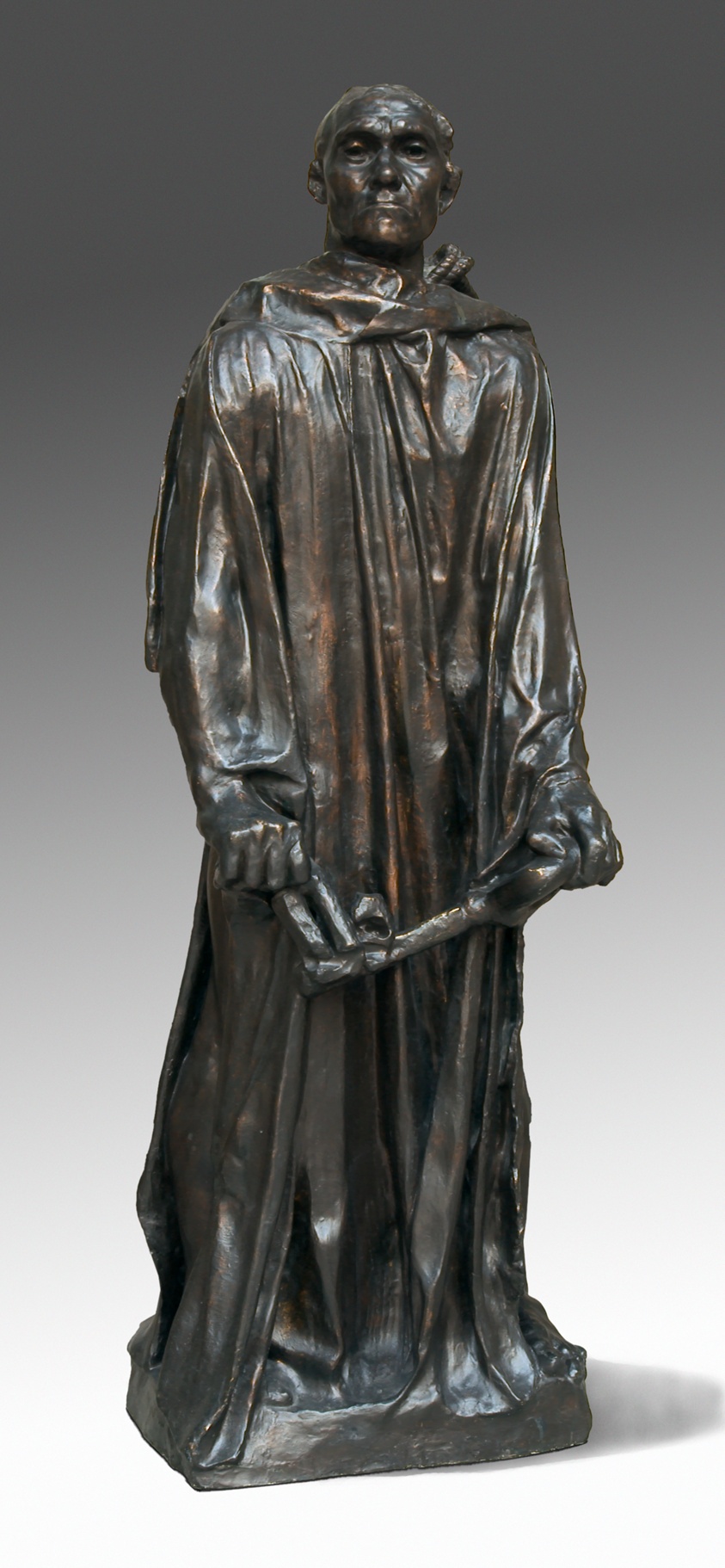
  2. A work made of plaster.
    A Burgher of Calais (Jean d'Aire)Auguste Rodin (French, 1840–1917) · Modeled 1889The Art Institute of Chicago · CC0
    Image & source
    A work made of plaster.

    Sculpture / Source record

    A Burgher of Calais (Jean d'Aire)

    Read the catalogue and evidence →
    Maker
    Auguste Rodin (French, 1840–1917)
    Date
    Modeled 1889
    Medium
    Plaster
    Collection
    The Art Institute of Chicago
    Accession
    1893.187
    Credit
    Gift of Mrs. Addie M. Hall Ellis
    Rights
    Public domain · CC0

    Public domain · CC0. Unchanged copy of the institution’s verified web image; smaller responsive JPEGs are resized derivatives. Full-resolution image remains linked to the institution. Editorial views may show a detail.

    Institution’s full-resolution image ↗Museum reuse policy ↗

    Institutional rights designation checked 2026-10-17. Catalogue descriptions are normalized from source data; visual interpretation may be unassessed.

    Original museum record ↗Read the CC0 dedication ↗

    02 / The Art Institute of Chicago / Look, then compare

    A Burgher of Calais (Jean d'Aire)

    Trace the deep vertical troughs of plaster sackcloth in Rodin’s study at the Art Institute of Chicago.

    Artologium interpretation · developed with AI assistance

    Plaster
    Auguste Rodin (French, 1840–1917) · Modeled 1889
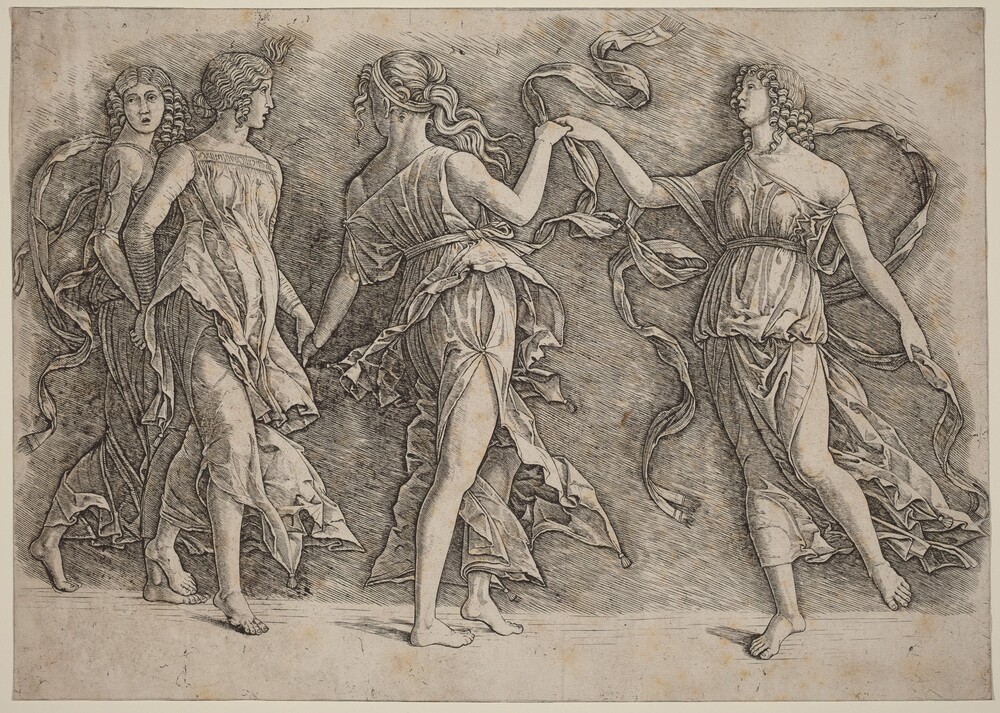
  3. Four Dancing Muses — Print by Workshop of Andrea Mantegna. engraving on laid paper.
    Four Dancing MusesWorkshop of Andrea Mantegna · after 1497National Gallery of Art · CC0
    Image & source
    Four Dancing Muses — Print by Workshop of Andrea Mantegna. engraving on laid paper.

    Print / Source record

    Four Dancing Muses

    Read the catalogue and evidence →
    Maker
    Workshop of Andrea Mantegna
    Date
    after 1497
    Medium
    engraving on laid paper
    Collection
    National Gallery of Art
    Accession
    1941.1.10
    Credit
    Gift of W.G. Russell Allen. Courtesy National Gallery of Art, Washington
    Rights
    Public domain · CC0

    Public domain · CC0. Unchanged copy of the institution’s verified 1000px IIIF display image; smaller responsive JPEGs are resized derivatives. Visit the institution for other available resolutions. Editorial views may show a detail.

    Institution’s full-resolution image ↗Museum reuse policy ↗

    Institutional rights designation checked 2026-10-21. Catalogue descriptions are normalized from source data; visual interpretation may be unassessed.

    Original museum record ↗Read the CC0 dedication ↗

    03 / National Gallery of Art / Look, then compare

    Four Dancing Muses

    Watch how fluttering, ribbon-like pleats register motion between the dancers in the National Gallery’s engraving.

    Artologium interpretation · developed with AI assistance

    engraving on laid paper
    Workshop of Andrea Mantegna · after 1497
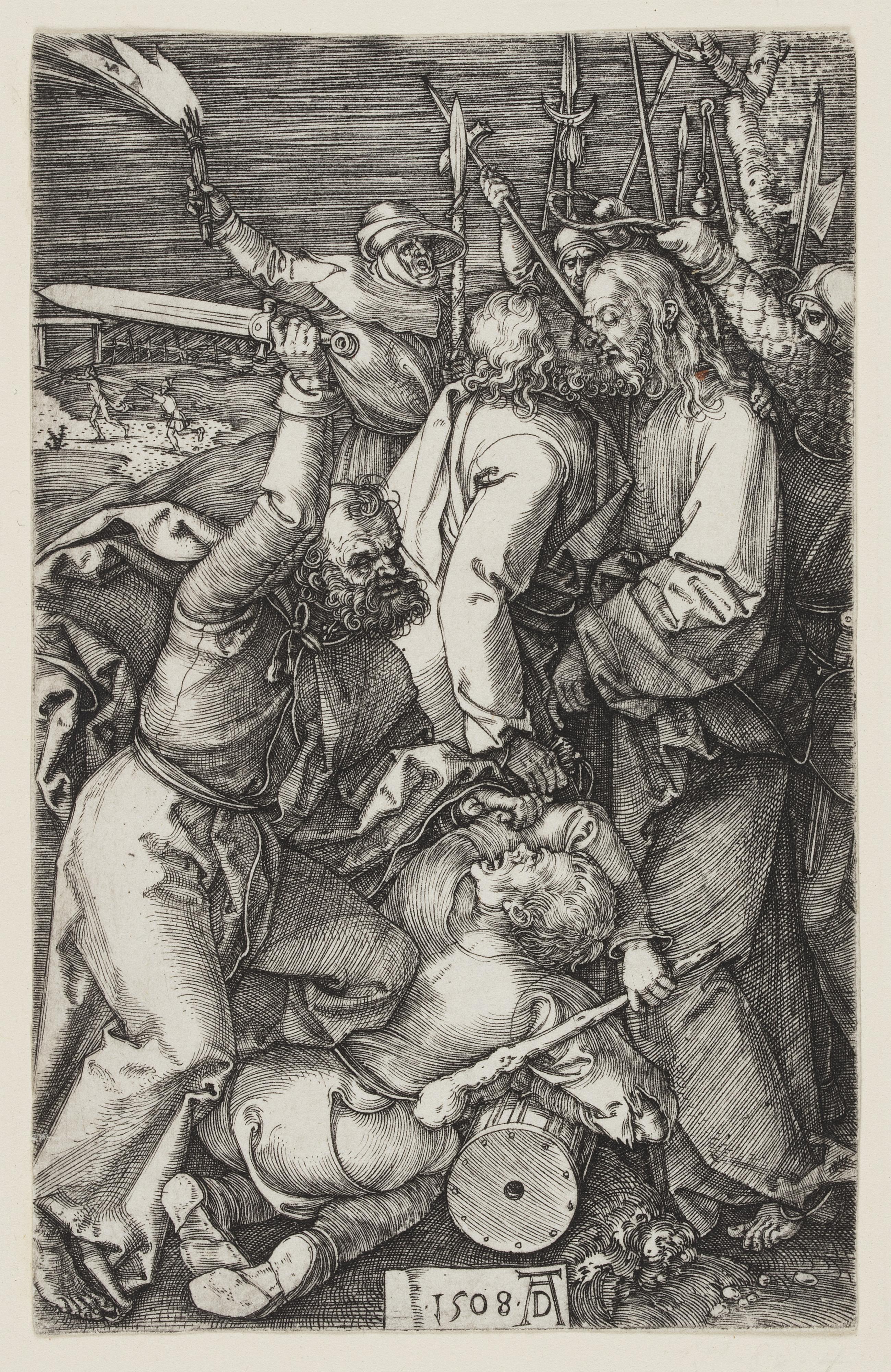
  4. BETRAYAL OF CHRIST, FROM THE ENGRAVED PASSION
    Betrayal of Christ, from The Engraved PassionAlbrecht Dürer, German, 1471–1528 · 1508Cooper Hewitt, Smithsonian Design Museum · CC0
    Image & source
    BETRAYAL OF CHRIST, FROM THE ENGRAVED PASSION

    Print / Source record

    Betrayal of Christ, from The Engraved Passion

    Read the catalogue and evidence →
    Maker
    Albrecht Dürer, German, 1471–1528
    Date
    1508
    Medium
    Engraving on laid paper
    Collection
    Cooper Hewitt, Smithsonian Design Museum
    Accession
    1951-82-4
    Credit
    Ex coll.: Rudolf Busch (b. ab. 1875), Mainz (Lugt 2190) Panofsky 112 Given by Leo Wallerstein
    Rights
    Public domain · CC0

    Public domain · CC0. Unchanged copy of the institution’s verified web image; smaller responsive JPEGs are resized derivatives. Full-resolution image remains linked to the institution. Editorial views may show a detail.

    Institution’s full-resolution image ↗Museum reuse policy ↗

    Institutional rights designation checked 2026-10-21. Catalogue descriptions are normalized from source data; visual interpretation may be unassessed.

    Original museum record ↗Read the CC0 dedication ↗

    04 / Cooper Hewitt, Smithsonian Design Museum / Look, then compare

    Betrayal of Christ, from The Engraved Passion

    Notice the sharp, crumpled facets of cloak in the foreground of Dürer’s engraving at Cooper Hewitt.

    Artologium interpretation · developed with AI assistance

    Engraving on laid paper
    Albrecht Dürer, German, 1471–1528 · 1508
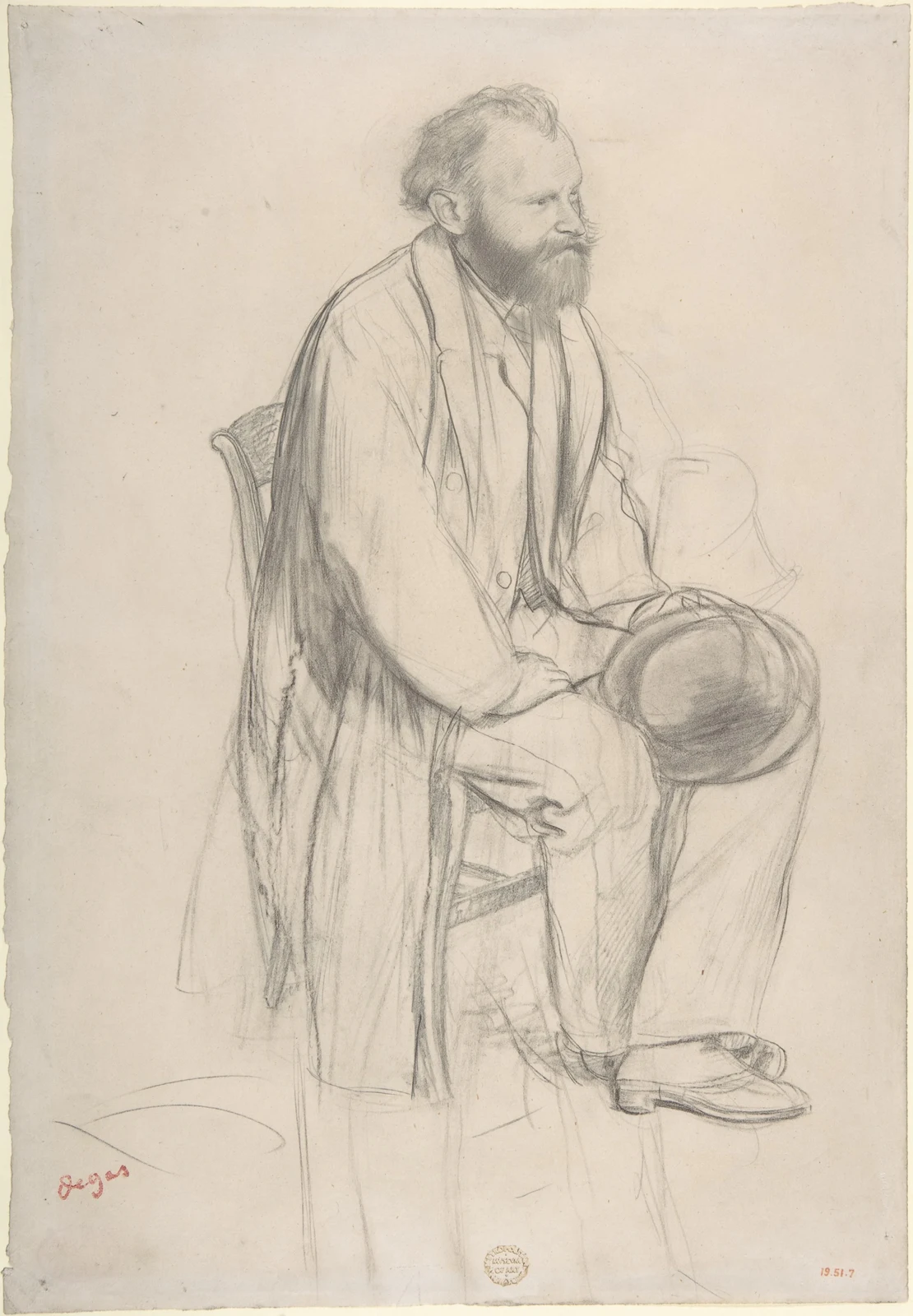
  5. A seated man holds his hat; searching graphite and chalk lines describe his pose.
    Édouard Manet, seatedEdgar Degas · ca. 1868The Metropolitan Museum of Art · CC0
    Image & source
    A seated man holds his hat; searching graphite and chalk lines describe his pose.

    Drawing / Source record

    Édouard Manet, seated

    Read the catalogue and evidence →
    Maker
    Edgar Degas
    Date
    ca. 1868
    Medium
    Graphite and black chalk
    Collection
    The Metropolitan Museum of Art
    Accession
    19.51.7
    Credit
    Rogers Fund, 1918
    Rights
    Public domain · CC0

    Public domain · CC0. Resized and converted to WebP; no recoloring. Homepage details may be cropped; work record presents the full image. Editorial views may show a detail.

    Institution’s full-resolution image ↗Museum reuse policy ↗Original museum record ↗Read the CC0 dedication ↗

    05 / The Metropolitan Museum of Art / Look, then compare

    Édouard Manet, seated

    Return to paper and chalk at The Met: see how a few quick creases at the elbow and knee establish how the seated body rests.

    Artologium interpretation · developed with AI assistance

    Graphite and black chalk
    Edgar Degas · ca. 1868

Where would you go next?

Keep this description and choose another way into the collection.

Continue exploring →Choose another path →