Artologium

Art, in relation.

A line becomes a world

A plant, a seated figure, an imagined harbor. Follow a line as its material and purpose change.

An authored path / 6 works

What happens when you trace a single contour, burin groove, or graphite stroke from edge to edge?

These comparisons follow following a line in the displayed images. Each stop keeps its own material, source and history.

Explore this description in the catalogue →
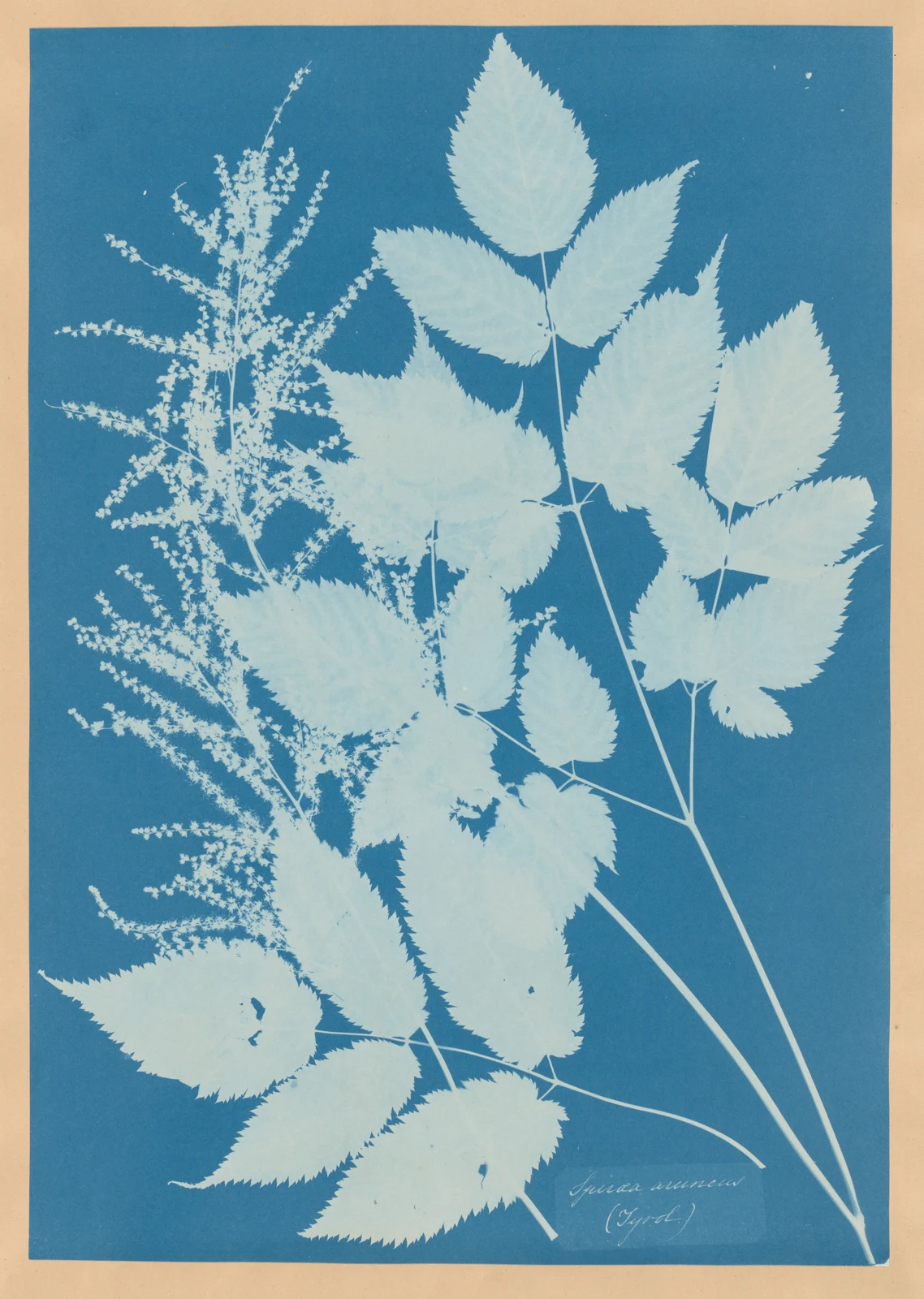
  1. Pale branching leaves and stems appear against a deep cyanotype blue.
    Spiraea aruncus (Tyrol)Anna Atkins · 1851–54The Metropolitan Museum of Art · CC0
    Image & source
    Pale branching leaves and stems appear against a deep cyanotype blue.

    Photography / Source record

    Spiraea aruncus (Tyrol)

    Read the catalogue and evidence →
    Maker
    Anna Atkins
    Date
    1851–54
    Medium
    Cyanotype
    Collection
    The Metropolitan Museum of Art
    Accession
    2004.172
    Credit
    Purchase, Alfred Stieglitz Society Gifts, 2004
    Rights
    Public domain · CC0

    Public domain · CC0. Resized and converted to WebP; no recoloring. Homepage details may be cropped; work record presents the full image. Editorial views may show a detail.

    Institution’s full-resolution image ↗Museum reuse policy ↗Original museum record ↗Read the CC0 dedication ↗

    01 / The Metropolitan Museum of Art / Look, then compare

    Spiraea aruncus (Tyrol)

    Begin with the branching edge of the plant. Its pale contour makes a form readable against blue.

    Artologium interpretation · developed with AI assistance

    Cyanotype
    Anna Atkins · 1851–54
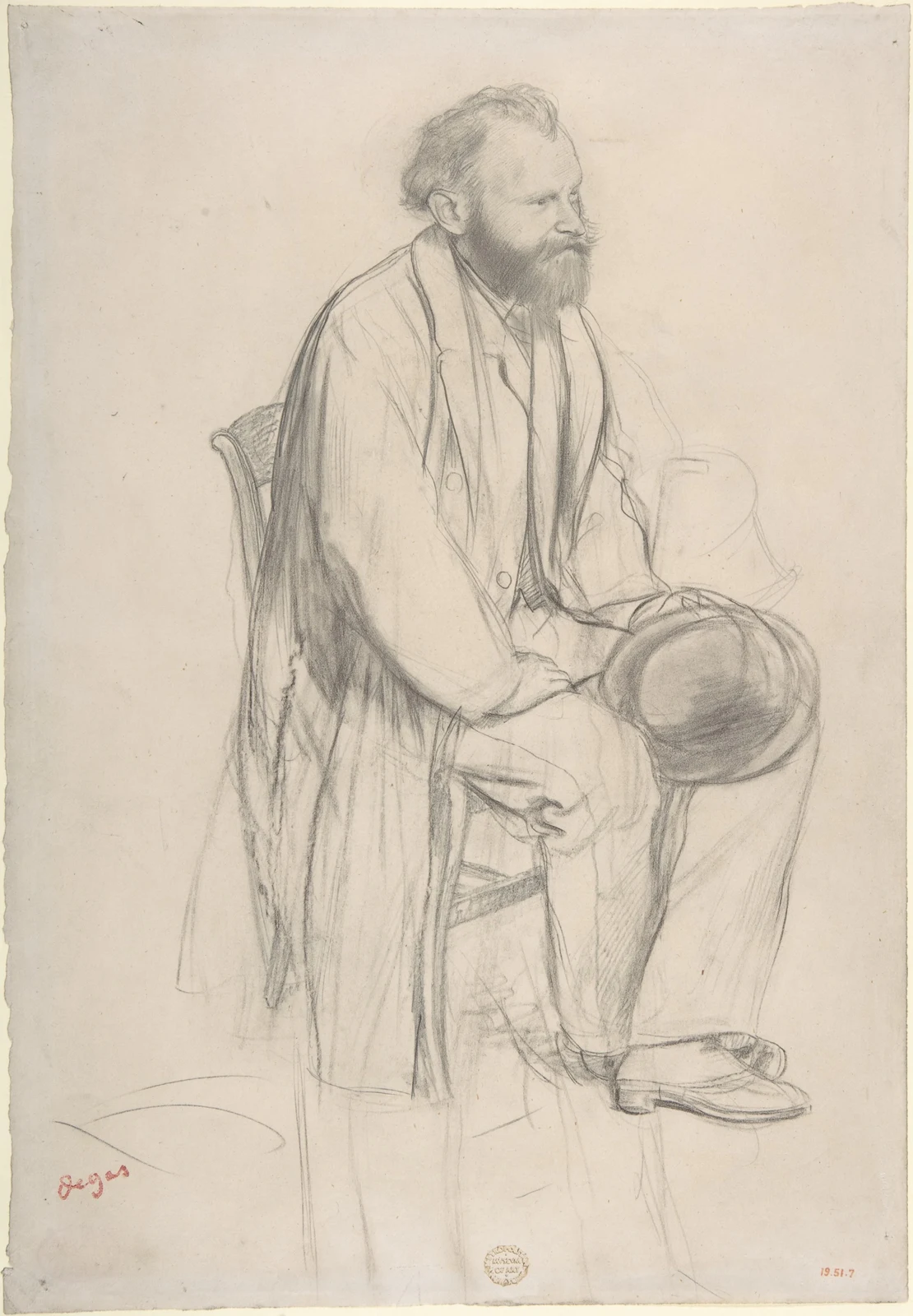
  2. A seated man holds his hat; searching graphite and chalk lines describe his pose.
    Édouard Manet, seatedEdgar Degas · ca. 1868The Metropolitan Museum of Art · CC0
    Image & source
    A seated man holds his hat; searching graphite and chalk lines describe his pose.

    Drawing / Source record

    Édouard Manet, seated

    Read the catalogue and evidence →
    Maker
    Edgar Degas
    Date
    ca. 1868
    Medium
    Graphite and black chalk
    Collection
    The Metropolitan Museum of Art
    Accession
    19.51.7
    Credit
    Rogers Fund, 1918
    Rights
    Public domain · CC0

    Public domain · CC0. Resized and converted to WebP; no recoloring. Homepage details may be cropped; work record presents the full image. Editorial views may show a detail.

    Institution’s full-resolution image ↗Museum reuse policy ↗Original museum record ↗Read the CC0 dedication ↗

    02 / The Metropolitan Museum of Art / Look, then compare

    Édouard Manet, seated

    Move to the figure. Multiple searching lines describe an edge that is less settled.

    Artologium interpretation · developed with AI assistance

    Graphite and black chalk
    Edgar Degas · ca. 1868
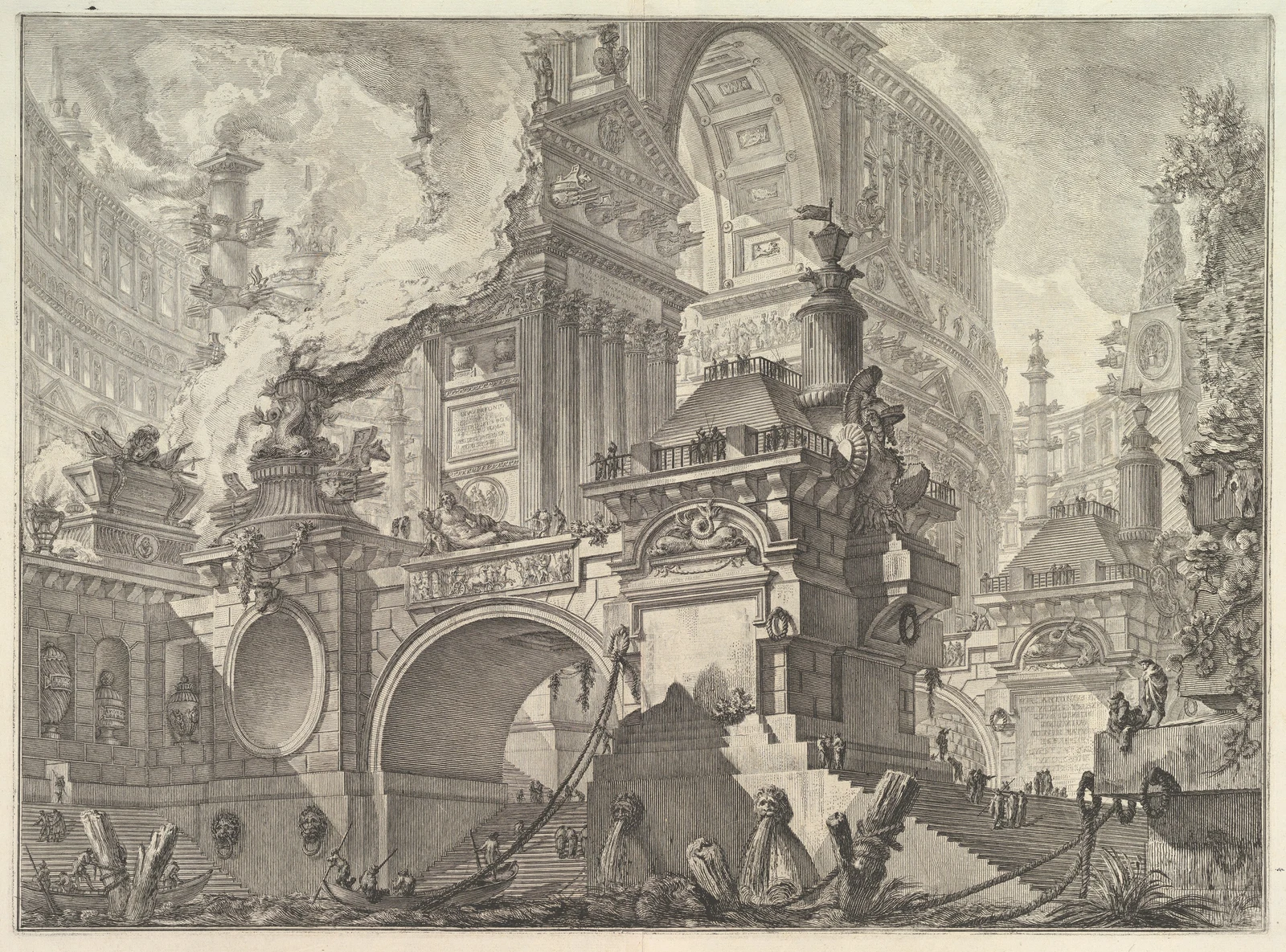
  3. An elaborate imagined harbor unfolds through arches, columns and receding space.
    An imagined Roman harborGiovanni Battista Piranesi · ca. 1749–50The Metropolitan Museum of Art · CC0
    Image & source
    An elaborate imagined harbor unfolds through arches, columns and receding space.

    Architecture / Source record

    An imagined Roman harbor

    Read the catalogue and evidence →
    Maker
    Giovanni Battista Piranesi
    Date
    ca. 1749–50
    Medium
    Etching, engraving, drypoint; second state of seven (Robison)
    Collection
    The Metropolitan Museum of Art
    Accession
    37.45.3(41)
    Credit
    Harris Brisbane Dick Fund, 1937
    Rights
    Public domain · CC0

    Public domain · CC0. Resized and converted to WebP; no recoloring. Homepage details may be cropped; work record presents the full image. Editorial views may show a detail.

    Institution’s full-resolution image ↗Museum reuse policy ↗Original museum record ↗Read the CC0 dedication ↗

    03 / The Metropolitan Museum of Art / Look, then compare

    An imagined Roman harbor

    Let those lines become a space. Overlapping architectural edges organize an imagined depth.

    Artologium interpretation · developed with AI assistance

    Etching, engraving, drypoint; second state of seven (Robison)
    Giovanni Battista Piranesi · ca. 1749–50

  4. Melencolia I — Print by Albrecht Dürer (German, 1471–1528). engraving.
    Melencolia IAlbrecht Dürer (German, 1471–1528) · 1514The Cleveland Museum of Art · CC0
    Image & source
    Melencolia I — Print by Albrecht Dürer (German, 1471–1528). engraving.

    Print / Source record

    Melencolia I

    Read the catalogue and evidence →
    Maker
    Albrecht Dürer (German, 1471–1528)
    Date
    1514
    Medium
    engraving
    Collection
    The Cleveland Museum of Art
    Accession
    1926.211
    Credit
    Gift of Leonard C. Hanna Jr., in memory of Ralph King
    Rights
    Public domain · CC0

    Public domain · CC0. Institution-provided display image; no Artologium pixel changes. Original-resolution image linked at source. Editorial views may show a detail.

    Institution’s full-resolution image ↗Museum reuse policy ↗

    Institutional rights designation checked 2026-10-17. Catalogue descriptions are normalized from source data; visual interpretation may be unassessed.

    Original museum record ↗Read the CC0 dedication ↗

    04 / The Cleveland Museum of Art / Look, then compare

    Melencolia I

    Look closely at the polyhedron in Cleveland’s impression: see how hundreds of straight engraved lines build both flat stone planes and deep shadow.

    Artologium interpretation · developed with AI assistance

    engraving
    Albrecht Dürer (German, 1471–1528) · 1514
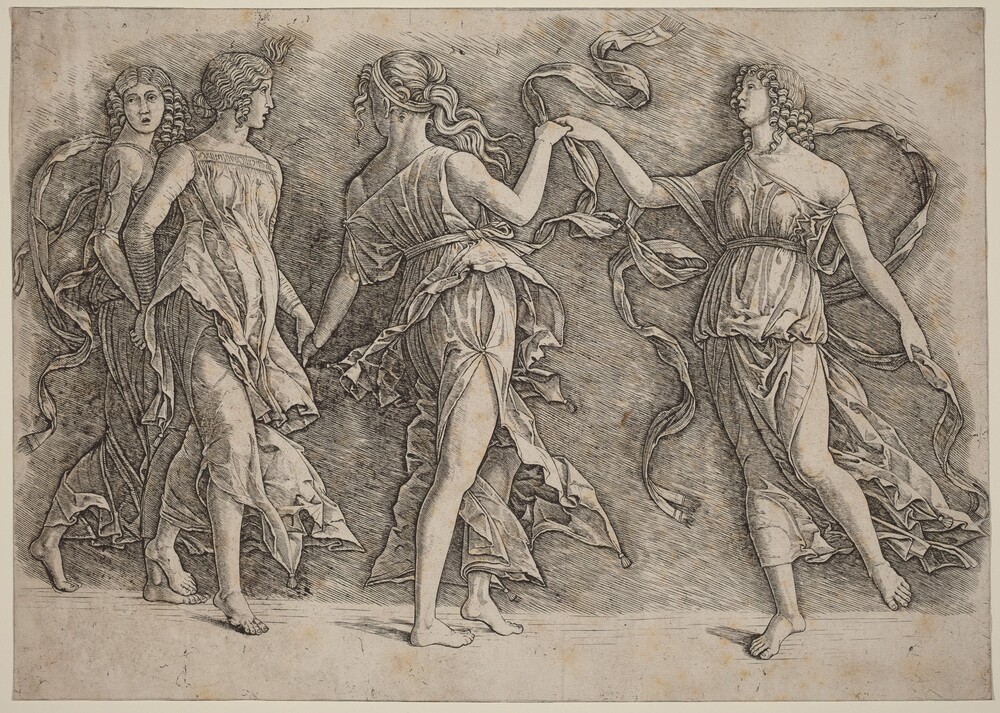
  5. Four Dancing Muses — Print by Workshop of Andrea Mantegna. engraving on laid paper.
    Four Dancing MusesWorkshop of Andrea Mantegna · after 1497National Gallery of Art · CC0
    Image & source
    Four Dancing Muses — Print by Workshop of Andrea Mantegna. engraving on laid paper.

    Print / Source record

    Four Dancing Muses

    Read the catalogue and evidence →
    Maker
    Workshop of Andrea Mantegna
    Date
    after 1497
    Medium
    engraving on laid paper
    Collection
    National Gallery of Art
    Accession
    1941.1.10
    Credit
    Gift of W.G. Russell Allen. Courtesy National Gallery of Art, Washington
    Rights
    Public domain · CC0

    Public domain · CC0. Unchanged copy of the institution’s verified 1000px IIIF display image; smaller responsive JPEGs are resized derivatives. Visit the institution for other available resolutions. Editorial views may show a detail.

    Institution’s full-resolution image ↗Museum reuse policy ↗

    Institutional rights designation checked 2026-10-21. Catalogue descriptions are normalized from source data; visual interpretation may be unassessed.

    Original museum record ↗Read the CC0 dedication ↗

    05 / National Gallery of Art / Look, then compare

    Four Dancing Muses

    Follow the linked arms and parallel diagonal hatching in Mantegna’s school engraving at the National Gallery of Art.

    Artologium interpretation · developed with AI assistance

    engraving on laid paper
    Workshop of Andrea Mantegna · after 1497
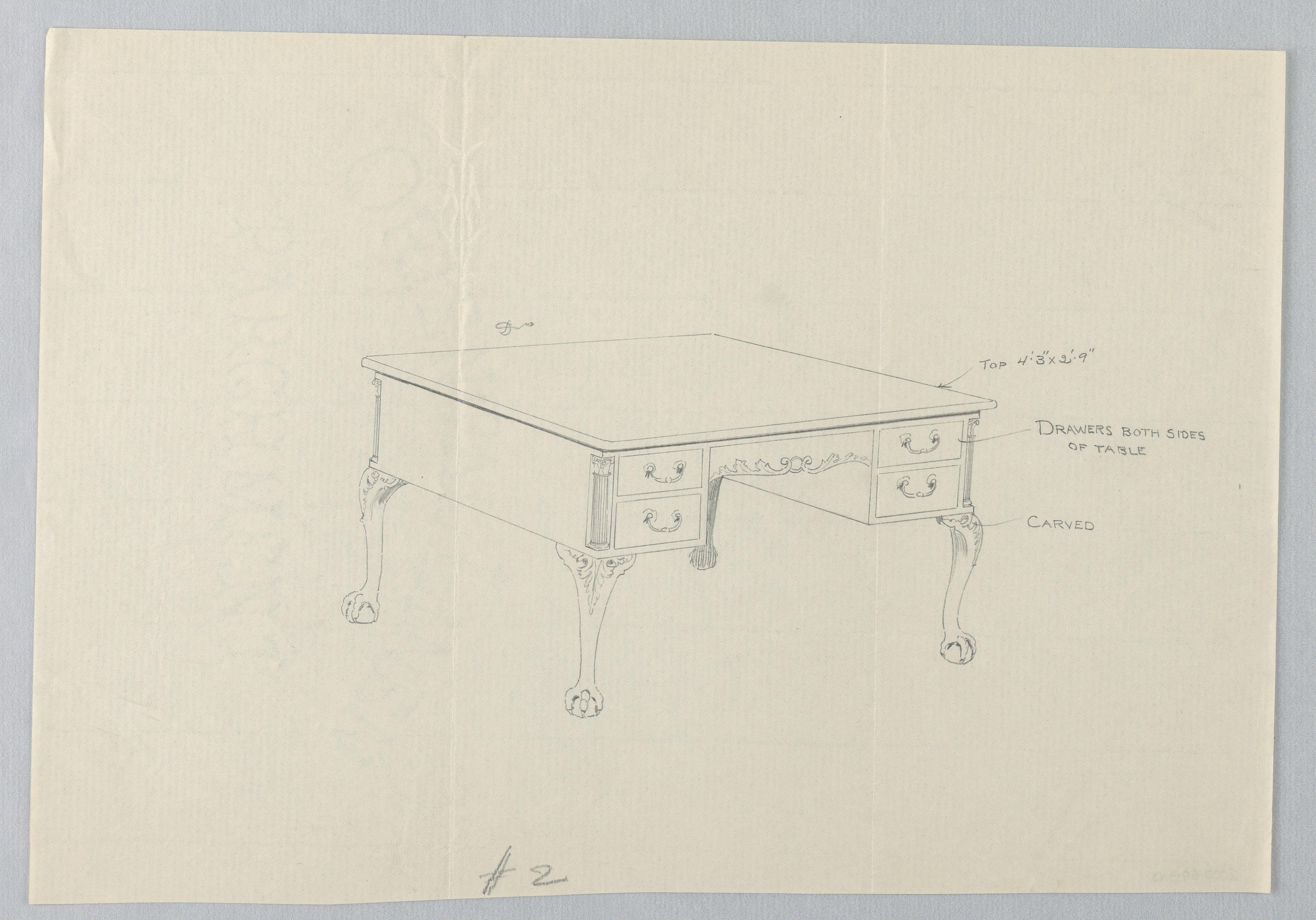
  6. DESIGN FOR WRITING TABLE NO. 2 AND LION-PAW FEET
    Design for Writing Table No. 2 and Lion-Paw FeetA.N. Davenport Co. · 1900–05Cooper Hewitt, Smithsonian Design Museum · CC0
    Image & source
    DESIGN FOR WRITING TABLE NO. 2 AND LION-PAW FEET

    Drawing / Source record

    Design for Writing Table No. 2 and Lion-Paw Feet

    Read the catalogue and evidence →
    Maker
    A.N. Davenport Co.
    Date
    1900–05
    Medium
    Graphite on thin cream paper
    Collection
    Cooper Hewitt, Smithsonian Design Museum
    Accession
    2000-69-310
    Credit
    Gift of The Lake St. Louis Historical Society
    Rights
    Public domain · CC0

    Public domain · CC0. Unchanged copy of the institution’s verified web image; smaller responsive JPEGs are resized derivatives. Full-resolution image remains linked to the institution. Editorial views may show a detail.

    Institution’s full-resolution image ↗Museum reuse policy ↗

    Institutional rights designation checked 2026-10-21. Catalogue descriptions are normalized from source data; visual interpretation may be unassessed.

    Original museum record ↗Read the CC0 dedication ↗

    06 / Cooper Hewitt, Smithsonian Design Museum / Look, then compare

    Design for Writing Table No. 2 and Lion-Paw Feet

    Compare the ruled architectural elevation lines with the freehand graphite curves of the lion-paw feet in Cooper Hewitt’s working drawing.

    Artologium interpretation · developed with AI assistance

    Graphite on thin cream paper
    A.N. Davenport Co. · 1900–05

Where would you go next?

Keep this description and choose another way into the collection.

Continue exploring →Choose another path →