Across collections / 02 / A record comparison
Two Cancelled Copper Plates
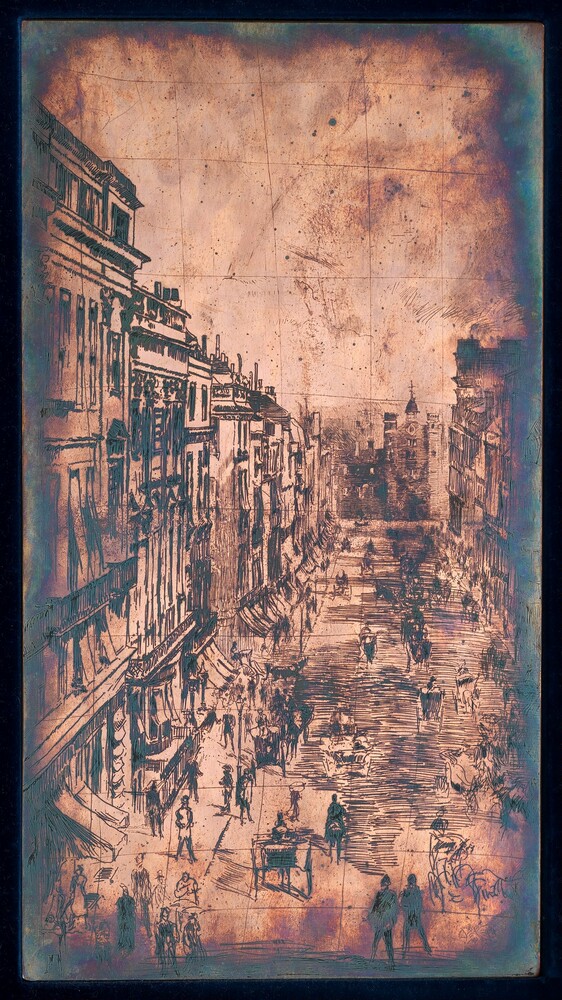
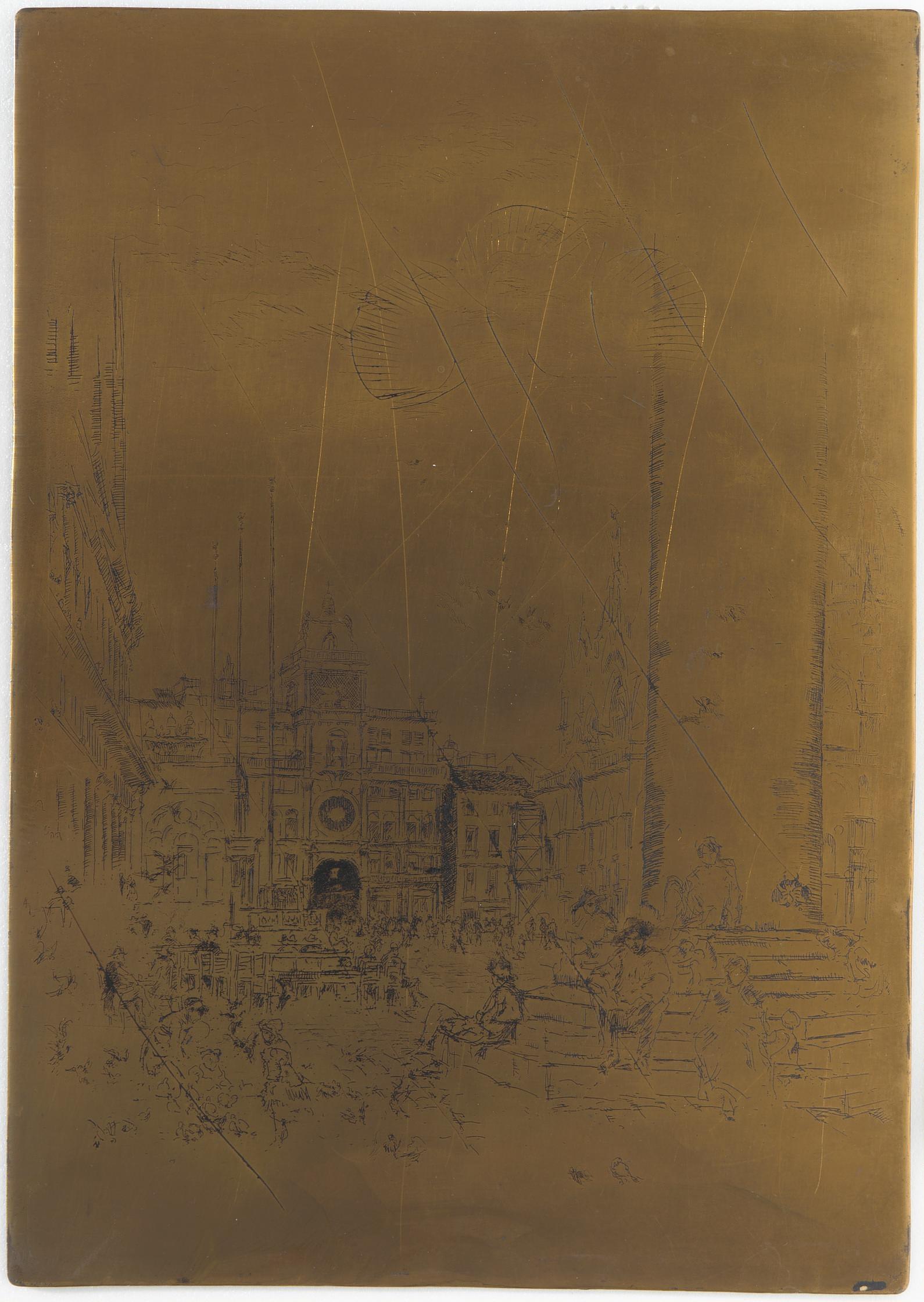
Prints usually travel while the metal matrix stays behind or is melted down. Here, two of James McNeill Whistler’s etched copper plates survive in two Washington collections—each deliberately scored with cancelling lines to end the edition.
Asian ArtF1902.132
James McNeill Whistler (1834-1903) · 1879-1880 · CC0
Source record ↗
Two surviving matrices
Where the needle etched and the burin cancelled.
Both objects are copper plates rather than paper impressions. Open either image to inspect how the architectural drawing sits beneath the later diagonal cancellation lines.
National Gallery of Art
- Object number
- 1943.3.1730
- Catalogue date
- 1878
- Medium
- etched and cancelled copper plate
- Dimensions as recorded
- Dimensions unrecorded
- Collection credit
- Rosenwald Collection. Courtesy National Gallery of Art, Washington
National Museum of Asian Art
- Object number
- F1902.132
- Catalogue date
- 1879-1880
- Medium
- Copper
- Dimensions as recorded
- H x W: 25.4 x 18.2 cm (10 x 7 3/16 in)
- Collection credit
- Gift of Charles Lang Freer
01 / Look
Read the two layers of incision.
In both copper plates, you can distinguish two separate episodes of mark-making: the fine, pictorial etching of streets, facades, and figures, and the straight, decisive cancelling strokes ruled across the metal afterward.
Notice the warm metallic reflectance and bevelled plate edges. On a printed sheet, those bevels become an embossed platemark; on the plate itself, they are physical edges of hammered copper.
02 / Read
How two museums catalogue a cancelled matrix.
1943.3.1730 at the National Gallery of Art records St. James’s Street (1878) as an “etched and cancelled copper plate” from the Lessing J. Rosenwald Collection. F1902.132 at the National Museum of Asian Art records Cancelled printing plate for “The Piazzetta” (1879–1880), gifted by Charles Lang Freer.
Comparing the records shows how two collections a few hundred yards apart on the National Mall preserve complementary parts of Whistler’s working material.
What this comparison can—and cannot—tell us
This comparison pairs two surviving copper plates by James McNeill Whistler held in different collections. Because they represent two different subjects (London in 1878 and Venice in 1879–1880), they are compared for their shared material practice—etching and plate cancellation—not as impressions of the same image.